
Activity category: Marine protected areas
Year: 2022
Type: Advocacy, Awareness raising, Scientific research
Status: Ongoing
Target areas: Inner Ionian Sea
Target organisms: Posidonia
Project website:
Partners

Funders
Activity category: Marine protected areas
Year: 2022
Type: Advocacy, Awareness raising, Scientific research
Status: Ongoing
Target areas: Inner Ionian Sea
Target organisms: Posidonia
Project website:
Partners
Funders
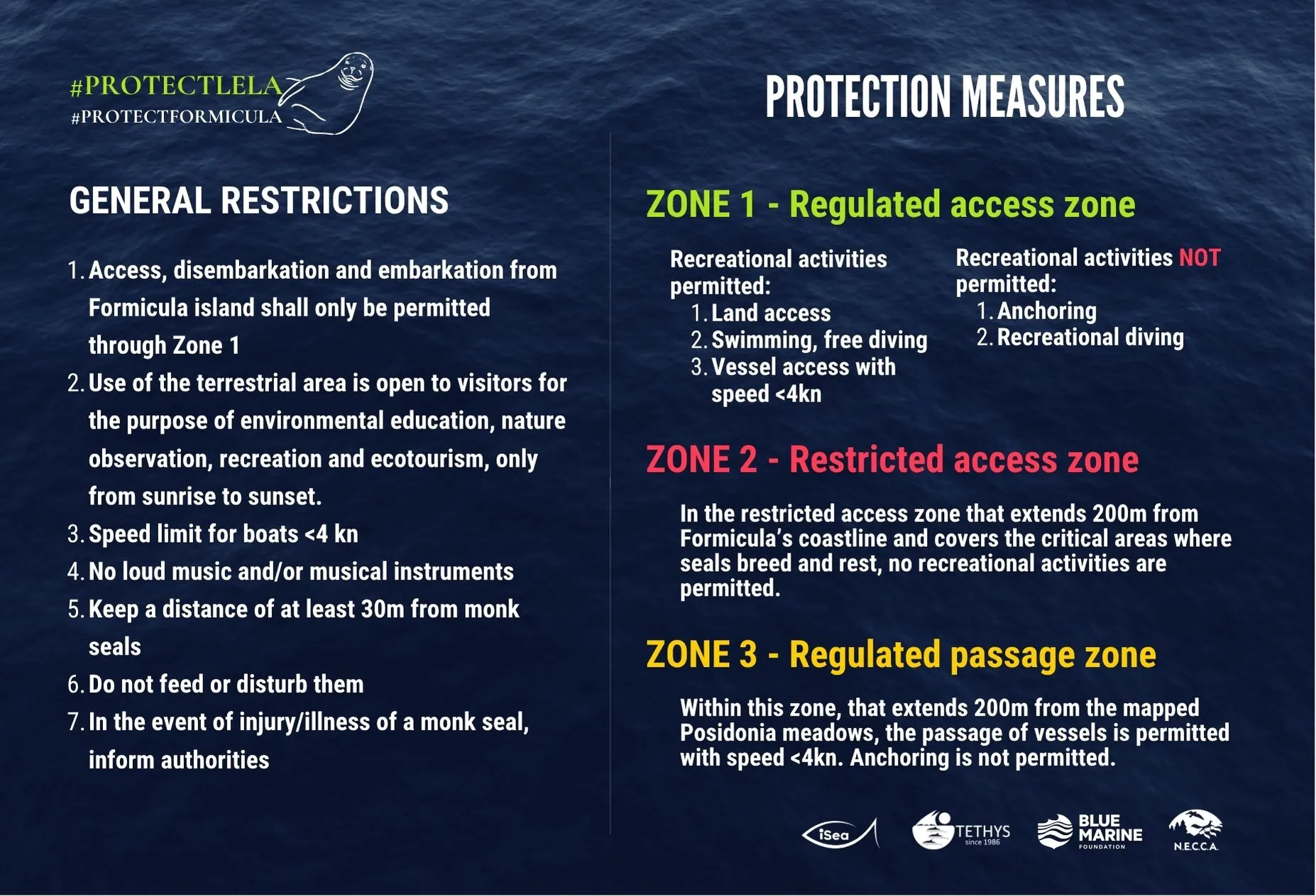
Protection measures
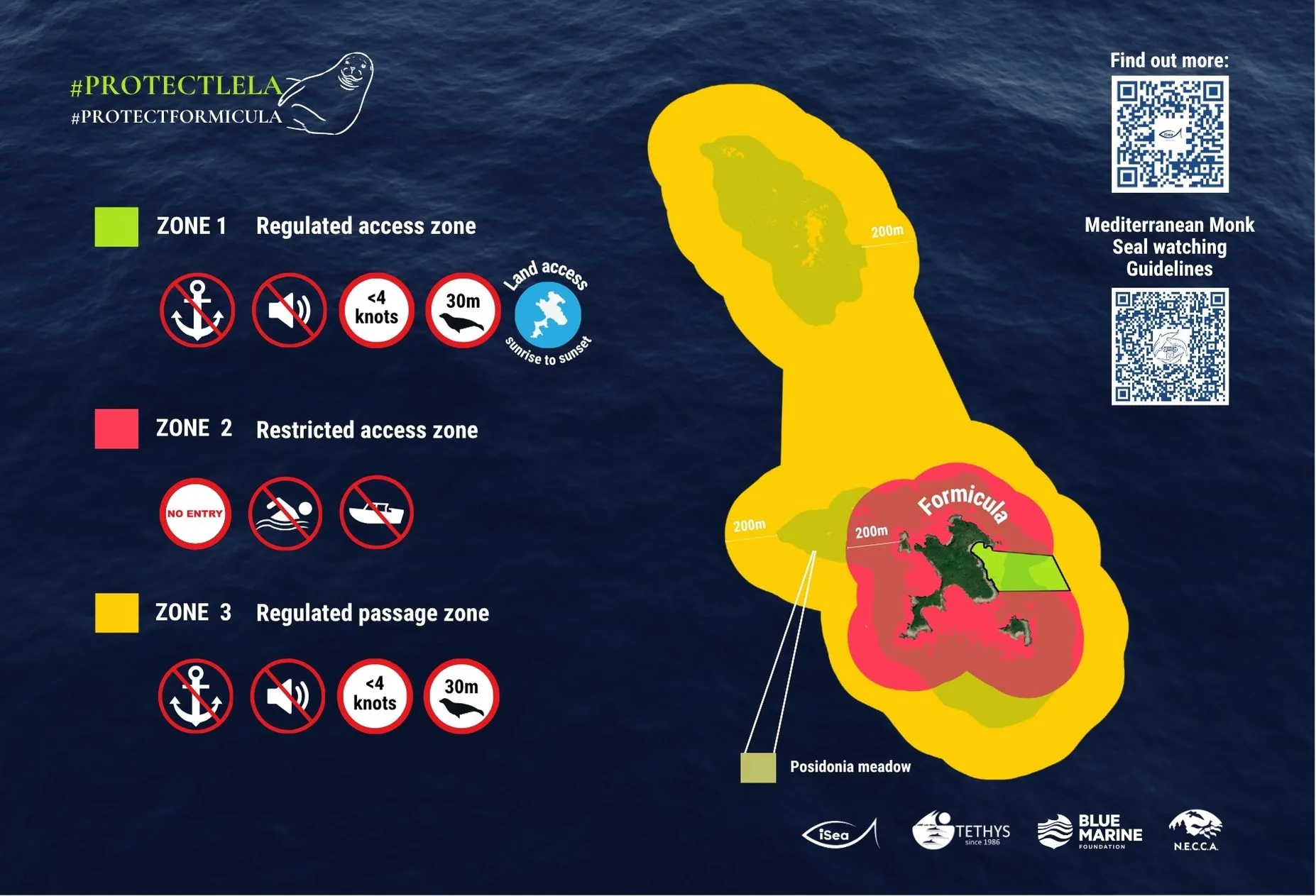
According to Ministerial Decision No. ΥΠΕΝ/ΔΔΦΠΒ/123711/3066 (Government Gazette D 953/31.12.2024), a 200-meter restricted access zone is established around Formicula island, protecting it from uncontrolled tourism activities.
This Decision marks a milestone for the area’s rich ecosystem and for the Monk seals themselves, which can now rest, feed, and reproduce undisturbed in Formicula, even during the summer months.
It also represents an important milestone for the ongoing joint efforts of the environmental organization iSea, Blue Marine Foundation, and Tethys Research Institute, all of which have been systematically working in the area to highlight the urgent need for meaningful protection. It is equally significant for the local stakeholders who supported the immediate adoption and implementation of protection measures for Formicula through our joint letter to the Ministry of Environment and Energy.
Let us all work together to ensure the implementation of these measures and protect Formicula!
Formicula
Formicula (or Fermekoulo), southeast of Lefkada, within the Inner Ionian Archipelago, is a valuable biodiversity hotspot and a natural heritage for the Mediterranean Sea, hosting rare species and sensitive ecosystems that survive away from intensive human activity.
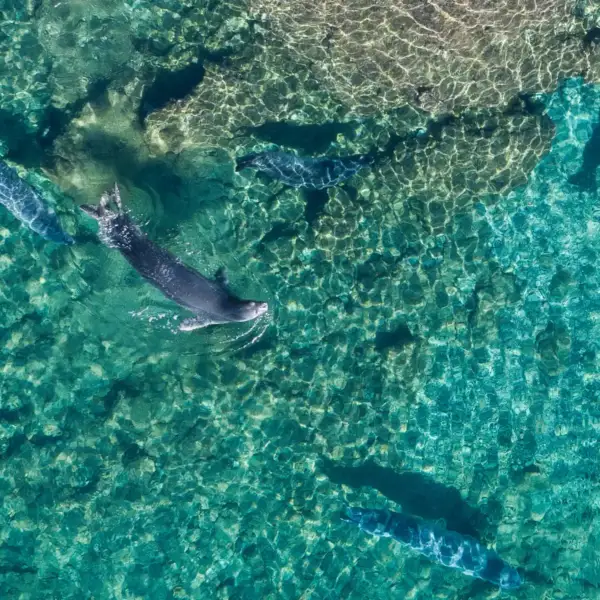
It is recognised as an important refuge for the Mediterranean monk seal (Monachus monachus) with over 40 different individuals recorded since 2012, using the site to rest, feed, play and breed withing the caves and around the waters of Formicula, and has since been monitored by Tethys Research Institute within the Ionian Dolphin Project. Yet the ecological significance of the area extends far beyond this species. The waters surrounding the islet host lush Posidonia seagrass meadows, one of the Mediterranean’s most important and productive habitats, functioning as a nursery area for fish and other species, filtering the water column, producing oxygen and acting as a natural “Blue Carbon” sink by capturing carbon dioxide and helping mitigate the impacts of the climate crisis.
At the same time, the area includes coralligenous formations, submerged caves, and significant populations of fish and invertebrates found in greater densities than in surrounding areas, as well as seabird species that use the islet for resting and breeding.
Formicula’s strict protection
Formicula became widely known to visitors over the last few years due to the increased sightings of Mediterranean monk seals, which unfortunatelly attracted a growing number of visitors who, in many cases, disturbed them and negatively impacted the area without respecting the vulnerable marine life.
Faced with the threat of uncontrolled tourism, combined with the significant presence of one of the world’s most endangered marine mammals, iSea began to systematically work in the area in 2022 in collaboration with Tethys Research Institute and Blue Marine Foundation. The aim was to collect additional data supporting the islands ecological importance and to mobilize local communities and tourism businesses in advocating for its science-based strict protection.
As a result, today Formicula is protected under Ministerial Decision 123711/3066 (Government Gazette 953/31.12.2024), which establishes regulations through zoning to reduce disturbance and protect critical habitats.
Finally, through a Memorandum of Collaboration between iSea and the Natural Environment and Climate Change Agency (NECCA), iSea is now actively supporting the protection of the marine area of Formicula islet by supporting its surveillance in collaboration with the Coast Guard and other relevant authorities, while also continuously informing visitors and residents at the site and across the region.
Ecological Value
Formicula is a biodiversity stronghold of exceptionally high ecological value. To date, 0.673 km² of Posidonia oceanica meadows have been mapped, exhibiting an overall high ecological status, contrasting the meadows present in nearby islets of the Inner Ionian that show a smaller extend and lower health status. In Formicula, the meadows are also estimated to store more than 2,512.63 MgC or 39.88 MgC/ha of Blue Carbon into their sediments.
Biodiversity monitoring in the islet, documented more than 80 marine species belonging to 20 taxonomic groups, including fish, algae, sponges, mollusks, echinoderms, and marine mammals. The presence of invasive species, such as lionfish (Pterois miles) and rabbitfish (Siganus spp.), are also recorded.
Actions
Since the issuance of the Ministerial Decision establishing protection measures, iSea has further strengthened its dialogue with local communities, visitors, and tourism businesses to ensure that the measures are implemented and suppported by the local community and actors.
Through frequent meetings with authorities and tourism businesses, as well as informational events for residents and visitors, iSea remains in continuous communication with over 250 tourism businesses and has informed over 8,500 residents and visitors, supporting the implementation of the protection measures for Formicula.
0.673
sq. km of Posidonia seagrass meadows have been mapped and assessed
250
tourism businesses have been informed
14
informational events have been organized