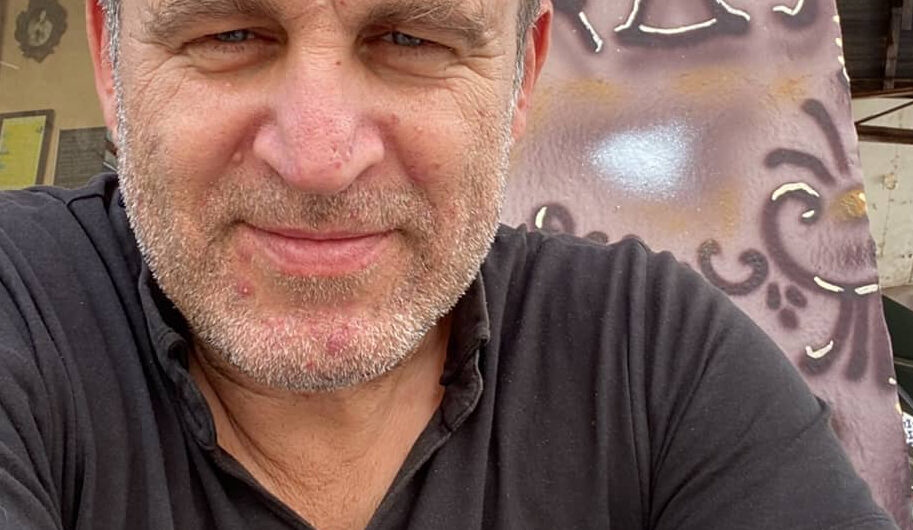
Ilias Hatzigavriil
Mr Ilias Hatzigavriil is of the fishers that are part of the “Fishing for Litter” program that takes action in the Northeastern Aegean. He’s 48 years old and he professionally started to be involved in fishing im 1988, at the age of 14, as this was his father’s profession.
R: How many years have you worked as a fisherman? How did your occupation with fishing begin?
IH: I’ve been working as a fisherman since 1988. At the time, I was 14 years old and it was my father’s profession.
R: Could you describe a day in the sea?
HX: There are calmer days, that aren’t that interesting and there are really good ones, that are fewer. The procedure generally is monotonous, but there are some amusing days that keep me alert. Whenever I’m in an area that is more demanding, it requires more effort but keeps me on my toes. While in multiday fishing efforts, there’s a lot of standing and fatigue.
R: What differences do you notice regarding the amount of waste compared to the past?
IH: In general, there is an increase of waste, but it does not apply to all types of waste. For example, nets and fishing gear remain in equivalent quantities, while plastic items and especially plastic bags and styrofoam, have increased considerably.
R: What kind of waste you’ve collected has made the biggest impression on you?
IH: Fragments of an airplane.
R: What does the sea and its protection mean to you?
IX: The sea means the world to me. I’ve spent a really big part of my life in it. The protection of the sea is a mentality type of thing. People were making more mistakes in the past but nowadays, people have learned to respect it.
R: What is the message you want to pass along the world?
IH: The sea can heal, as long as we can understand it.
iSea’s «Fishing For Litter» program is implemented for 6 years in a row, in lots of different areas in Greece, in collaboration with the A C Laskaridis Charitable Foundation. The ambassadors of this program, the professional fishermen who actively support the effort of collecting and recording aquatic litter from the sea all over the country, talk about the nature of their profession and share their experience and thoughts about the program.
We would like to thank all the fishermen who cooperated with us, for a more effective implementation of the “Fishing For Litter” program and give a personal touch to this effort.