Ray ex situ conservation
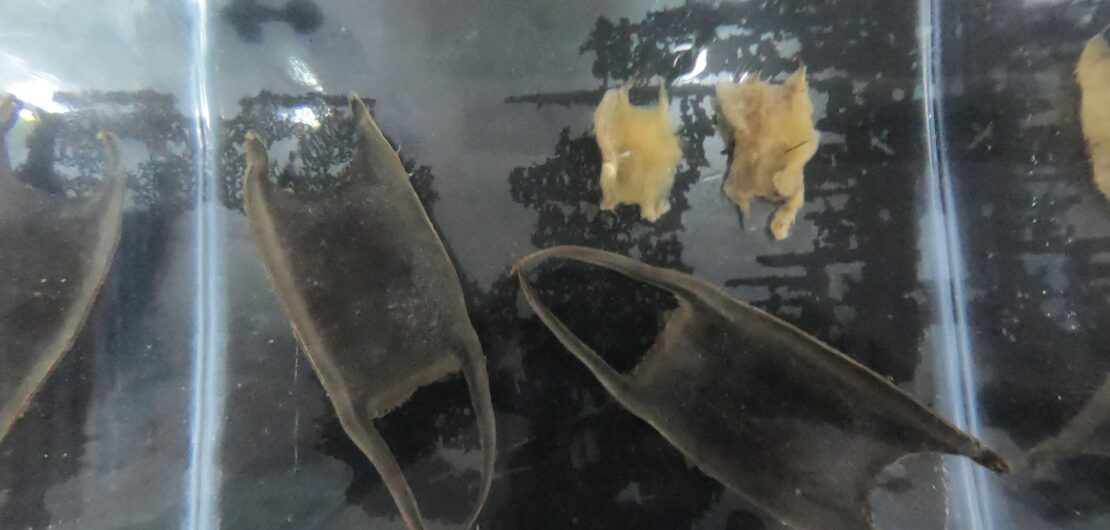
Sharks and rays are among the most threatened groups of fish, with 1/3 of the populations of the approximately 1,300 species worldwide at risk of extinction. Their protection is vital for marine ecosystems. For this reason, iSea aims, among other direct conservation actions, to incubate eggs of the rough ray (Raja radula) and the thornback ray (Raja clavata), exploring the possibilities of their ex situ conservation.
The rough ray is a Critically Endangered, Mediterranean endemic species, reaching up to 70 cm in length, while the thornback ray has been assessed as Vulnerable on the Greek Red List of threatened species and can exceed 80 cm. Both species lay their eggs on sandy or muddy seabeds, wherethey are often accidentally caught by trawls, bottom-set gillnets, and longlines.
During samplings carried out within iSea’s projects that contribute to the increase of scientific knowledge on sharks and rays, egg cases of rough rays and thornback rays, as well as those of other species, are often found entangled in fishers’ nets. Some of these eggs could have the potential to hatch under the right conditions, giving the young a second chance to be added to their species’ threatened populations and help them recover.
The goal of the Thermaikos Biodiversity Project is to collaborate with local fishing communities to incubate as many eggs of different ray species as possible, aiming at the gradual restoration of their populations, while also raising awareness among the fishing community and the Greek public.