The protection of wildlife and greek sealife on the foreground!
 Common statement of 15 environmental organizations occasioned by Ziphius cavirostris incident.
 Common statement of 15 environmental organizations occasioned by Ziphius cavirostris incident.
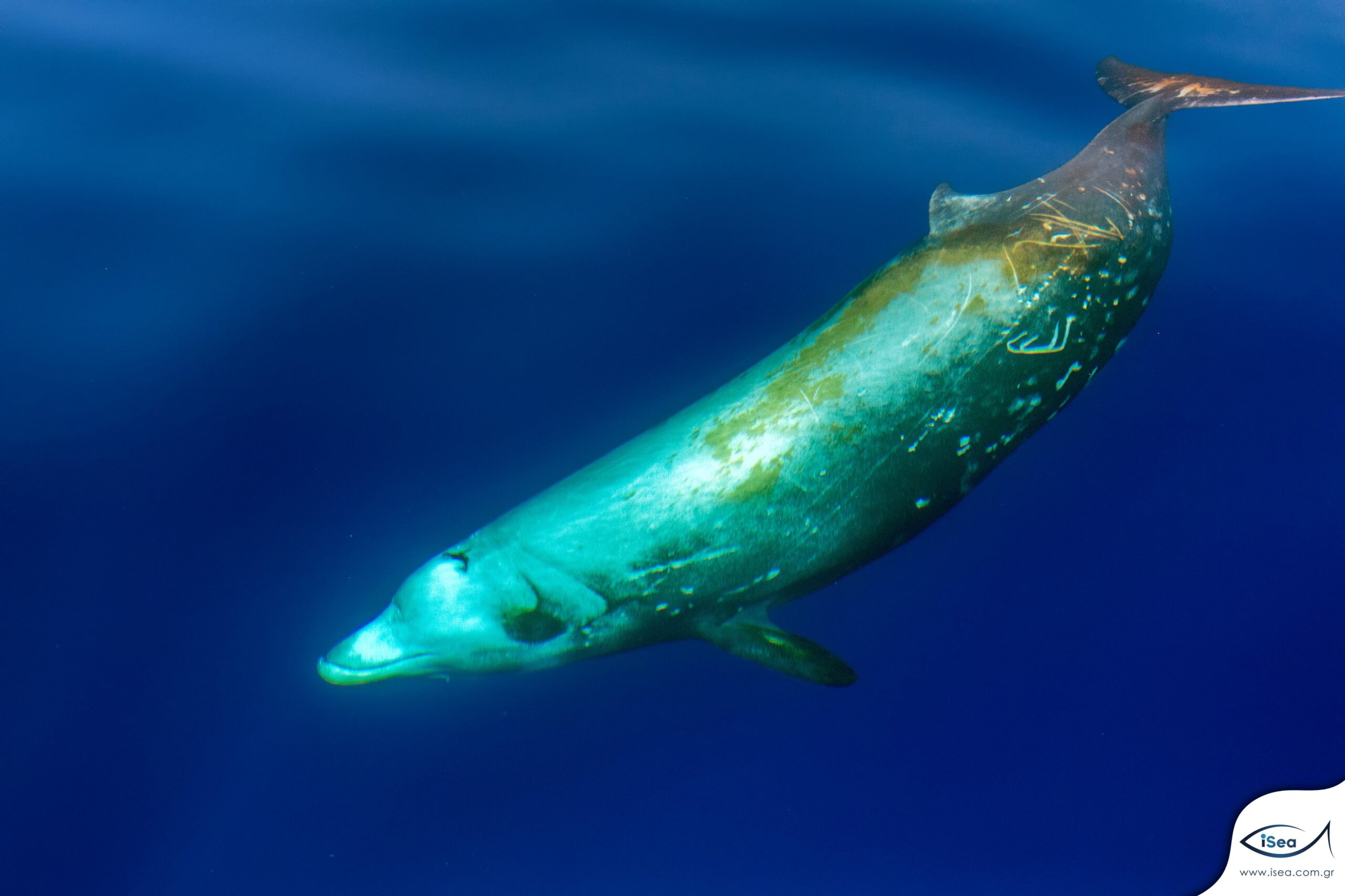 Ο ζιφιός εμφανίστηκε για να μας υπενθυμίσει ότι για ακόμα μια φορά βλέπουμε το δέντρο και χάνουμε το δάσος!
As part of the “Know-Participate-Protect the Environment” project, iSea and The Green Tank invite you to a webinar on “Platic pollution: Science and Data” aimed at informing participants about the latest data regarding marine pollution from plastic litter.
Find more information about the webinar here.
The webinar is the thrid from a series of webinars aiming to empower citizens, especially young people, as well as volunteer groups, to be actively involved in environmental governance. The project focuses on three topics: climate crisis, biodiversity loss and plastic pollution, and introductory webinars are organized to provide information on each of the project’s three environmental topics.
To attend the webinar fill in the application form here.
The project “ Learn-Participate-Protect the environment” is implemented within the Active citizens fund program, by iSea and its partner The Green Tank.
Active Citizens Fund in Greece is supported through a € 12m grant from Iceland, Liechtenstein and Norway as part of the EEA Grants 2014 – 2021. The program aims to develop the sustainability and capacity of the civil society sector in Greece, and to strengthen its role in promoting and safeguarding democratic procedures, active citizenship, and human rights. The Fund Operator for the Active Citizens Fund in Greece is Bodossaki Foundation in consortium with SolidarityNow.
Το webinar για τη ρύπανση από πλαστικά αποτελεί το τρίτο από μία σειρά webinars που θα πραγματοποιηθούν με στόχο την ενδυνάμωση των πολιτών, και ειδικά των νέων, των φοιτητών και των φοιτητριών, καθώς και των εθελοντικών ομάδων, ώστε να ενισχυθεί η συμμετοχή τους στις δημόσιες συζητήσεις και στη λήψη αποφάσεων που αφορούν σε φλέγοντα περιβαλλοντικά ζητήματα. Το έργο επικεντρώνεται σε τρεις θεματικές: την κλιματική κρίση, την απώλεια της βιοποικιλότητας και τη ρύπανση από πλαστικά και τα εισαγωγικά webinars διοργανώνονται με στόχο την ενημέρωση σχετικά με το αντικείμενο κάθε μιας από αυτές τις τρεις περιβαλλοντικές θεματικές του έργου.
Για να παρακολουθήσετε το webinar συμπληρώστε την αίτηση συμμετοχής εδώ.
Το έργο «Γνωρίζω-Συμμετέχω-Προστατεύω το περιβάλλον» υλοποιείται στο πλαίσιο του προγράμματος Active citizens fund, με φορέα υλοποίησης την iSea και εταίρο το The Green Tank.
Το πρόγραμμα Active citizens fund, ύψους € 12εκ, χρηματοδοτείται από την Ισλανδία, το Λιχτενστάιν και τη Νορβηγία και είναι μέρος του χρηματοδοτικού μηχανισμού του Ευρωπαϊκού Οικονομικού Χώρου (ΕΟΧ) περιόδου 2014 – 2021, γνωστού ως EEA Grants. Το πρόγραμμα στοχεύει στην ενδυνάμωση και την ενίσχυση της βιωσιμότητας της κοινωνίας των πολιτών και στην ανάδειξη του ρόλου της στην προαγωγή των δημοκρατικών διαδικασιών, στην ενίσχυση της συμμετοχής των πολιτών στα κοινά και στην προάσπιση των ανθρωπίνων δικαιωμάτων. Τη διαχείριση της επιχορήγησης του προγράμματος Active citizens fund για την Ελλάδα έχουν αναλάβει από κοινού το Ίδρυμα Μποδοσάκη και το SolidarityNow.
According to the new and updated Greek Chondrichthyans Checklist, which was developed and published by iSea in collaboration with the IUCN Species Survival Commission Shark Specialist Group/ Mediterranean Regional Group and Greek researchers, the Greek waters host a biodiversity of 61 chondrichthyan species (1 chimera, 34 sharks and 26 batoids) with confirmed presence.
On Monday 22 November, there was an online presentation of the book of the updated Greek Chondrichthyans Checklist, by iSea’s Director and Member of the IUCN Shark Specialist Group/ Mediterranean Regional Group, Ioannis Giovos, who talked about the results of this process and the methodology that was followed.
We warmly thank Dr. Katerina Koutsovoulou, representative from the Green Fund, and Dr. Petros Lymberakis, Chair of the Hellenic Zoological Society, who gave a greeting speech, as well as Dr. Alen Soldo and Dr. Fabrizio Serena (Co-Regional Vice Chairs of the IUCN Shark Specialist Group for the Mediterranean) who talked about the importance of chondricthyans and their presence in the Mediterranean. Finally, we would like to thank Dr. Yannis Papastamatiou (Assistant Professor at the Department of Biological Sciences, Florida International University) who showcased the importance of checklists in conservation.
As part of the “Know-Participate-Protect the Environment” project, iSea and The Green Tank invite you to a webinar on “Biodiversity: Science and Data” aimed at informing participants about the latest data regarding biodiversity loss.
Find more information about the webinar here.
The webinar is the second from a series of webinars aiming to empower citizens, especially young people, as well as volunteer groups, to be actively involved in environmental governance. The project focuses on three topics: climate crisis, biodiversity loss and plastic pollution, and introductory webinars are organized to provide information on each of the project’s three environmental topics.
To attend the webinar fill in the application form here.
The project “ Learn-Participate-Protect the environment” is implemented within the Active citizens fund program, by iSea and its partner The Green Tank.
Active Citizens Fund in Greece is supported through a € 12m grant from Iceland, Liechtenstein and Norway as part of the EEA Grants 2014 – 2021. The program aims to develop the sustainability and capacity of the civil society sector in Greece, and to strengthen its role in promoting and safeguarding democratic procedures, active citizenship, and human rights. The Fund Operator for the Active Citizens Fund in Greece is Bodossaki Foundation in consortium with SolidarityNow.
As part of the “Know-Participate-Protect the Environment” project, iSea and The Green Tank invite you to a webinar on “Climate Change: Science and Data” aimed at informing participants about the latest data regarding climate crisis.
Find more information about the webinar here.
The webinar is the first from a series of webinars aiming to empower citizens, especially young people, as well as volunteer groups, to be actively involved in environmental governance. The project focuses on three topics: climate crisis, biodiversity loss and plastic pollution, and introductory webinars are organized to provide information on each of the project’s three environmental topics.
To attend the webinar fill in the application form here.
The project ” Learn-Participate-Protect the environment” is implemented within the Active citizens fund program, by iSea and its partner The Green Tank.
Active Citizens Fund in Greece is supported through a € 12m grant from Iceland, Liechtenstein and Norway as part of the EEA Grants 2014 – 2021. The program aims to develop the sustainability and capacity of the civil society sector in Greece, and to strengthen its role in promoting and safeguarding democratic procedures, active citizenship, and human rights. The Fund Operator for the Active Citizens Fund in Greece is Bodossaki Foundation in consortium with SolidarityNow.
In the context of the project “Learn-Participate-Protect the Environment” we are looking for “mentors” volunteers, with the aim to train them for their collaboration in different tasks depending on their experience and interests.
Find more information on the duties and responsibilities of “mentors” volunteers here.
To express your interest, fill in the participation form until 20/9/2021.
The project ” Learn-Participate-Protect the environment” is implemented within the Active citizens fund program, by iSea and its partner The Green Tank.
Active Citizens Fund in Greece is supported through a € 12m grant from Iceland, Liechtenstein and Norway as part of the EEA Grants 2014 – 2021. The program aims to develop the sustainability and capacity of the civil society sector in Greece, and to strengthen its role in promoting and safeguarding democratic procedures, active citizenship, and human rights. The Fund Operator for the Active Citizens Fund in Greece is Bodossaki Foundation in consortium with SolidarityNow.
Unfortunately, once again, we came across a news report that praises the illegal fishing of a protected sharks species, the Bluntnose Sixgill shark, Hexanchus griseus (SBL), a species protected by Greek law. The phenomenon of fishing Bluntnose Sixgill sharks is very common in Greece. So much so, that we often come across photos of the species from fish markets where they illegally sell them as the species “galeos” or promote their consumption stating that they are “exquisite delicacies”.
By systematically recording these phenomena and being in close cooperation with fishers and the relevant competent authorities, we have come to believe that most of such incidents and relevant press reports stem from the lack of knowledge of both fishers and the competent authorities in regard to the relevant legislation and the identification of species.
In the context of our project Alliance for Survival II, we aim to sensitize the public and enhance the knowledge of the fishing community and the competent authorities to address the phenomenon of bycatch of vulnerable species. The response to these efforts has been positive as more and more fishers are releasing not only protected species but also species that are vulnerable because they understand that in order for an ecosystem to be healthy the existence of top predators, such as sharks, is necessary.
In this context, a Citizen Guide has been created in which you can find out which competent authority you should contact in case you encounter an incident of illegal fishing, trade, or demonstration of a protected species of shark, batoid or sea turtle.
In the same context, an Identification Guide has been created, which is addressed to fishers and port authorities and includes all species of sharks, batoids and chimaeras that are present in the Greek seas, providing information not only on their identification and their conservation status but also for their protection status.
We hope that in the future we will not see any other incidents like these, or press reports of such in the news.
Find the Citizen Guide in Greek
Find the Identification Species Guide in Greek
Find the article from the incident in Corfu
Chondrichthyans (sharks, rays, skates and chimaeras) play a pivotal role in the marine environment providing stability to coastal and oceanic ecosystem structures and functions.
Today, about half of the Mediterranean sharks and batoids are threatened with extinction, mainly due to by-catch. Nevertheless, research on Chondrichthyes, especially in the Eastern Mediterranean, is limited.
In the framework of The MECO project and ELIFE LIFE project, we utilised open data from citizens’ science projects, open-access databases GBIF and OBIS, scientific literature, but also from the Cypriot EU Data Collection Framework to present a reconstructed chondrichthyans national list with all species that have been confirmed to be present in the Cypriot seas. The scientific publication was led by Marine and Environmental Research Lab and iSea in collaboration with Department of Fisheries and Marine Research and other entities from Greece, Italy and the United Kingdom.
It produced vital data for the management and conservation of Chondrichthyes such as the presence of three new species (Dalatias licha, Taeniurops grabatus, and Squatina aculeata) for Cyprus, important grounds for the critically endangered Blackchin Guitafish (Glaucostegus cemiculus) in the Mediterranean, and potential migratory routes for other species.
The updated list of Cyprus contains 32 species of sharks and 28 species of batoids.
The publication is open-access and can be read here.