
Major breakthroughs at CMS COP15
The CMS COP15 in Brazil, which concluded this Sunday (March 29), marked a significant step forward for the protection and conservation of the marine environment. The decisions to fully protect thresher sharks and hammerhead sharks under Appendix I, combined with key initiatives for the protection of seamounts and the regulation of deep-sea mining, set a strong new course for safeguarding migratory marine species and their habitats.
The dynamic contribution of COP15 to ensuring the protection of migratory species, particularly aquatic ones, is now clear. The ambitious plans and strengthened protection measures are also reflected in the words of João Paulo Capobianco, President of COP15: “We protect species that may never remain within our borders. We invest in a natural heritage that does not belong to us, but for which we are all responsible. In this way, we give concrete meaning to global solidarity, recognising that migratory species transcend nations, jurisdictions, and generations.” More specifically, significant progress was made for 40 species that were added to the CMS Appendices, including shark species.
New Appendix I Listings (Strict Protection): Several shark species were added to Appendix I, which prohibits their capture and requires strict protection from all CMS Parties.
- Thresher sharks: All three species, Alopias pelagicus, Alopias superciliosus, and Alopias vulpinus, were listed under Appendix I.
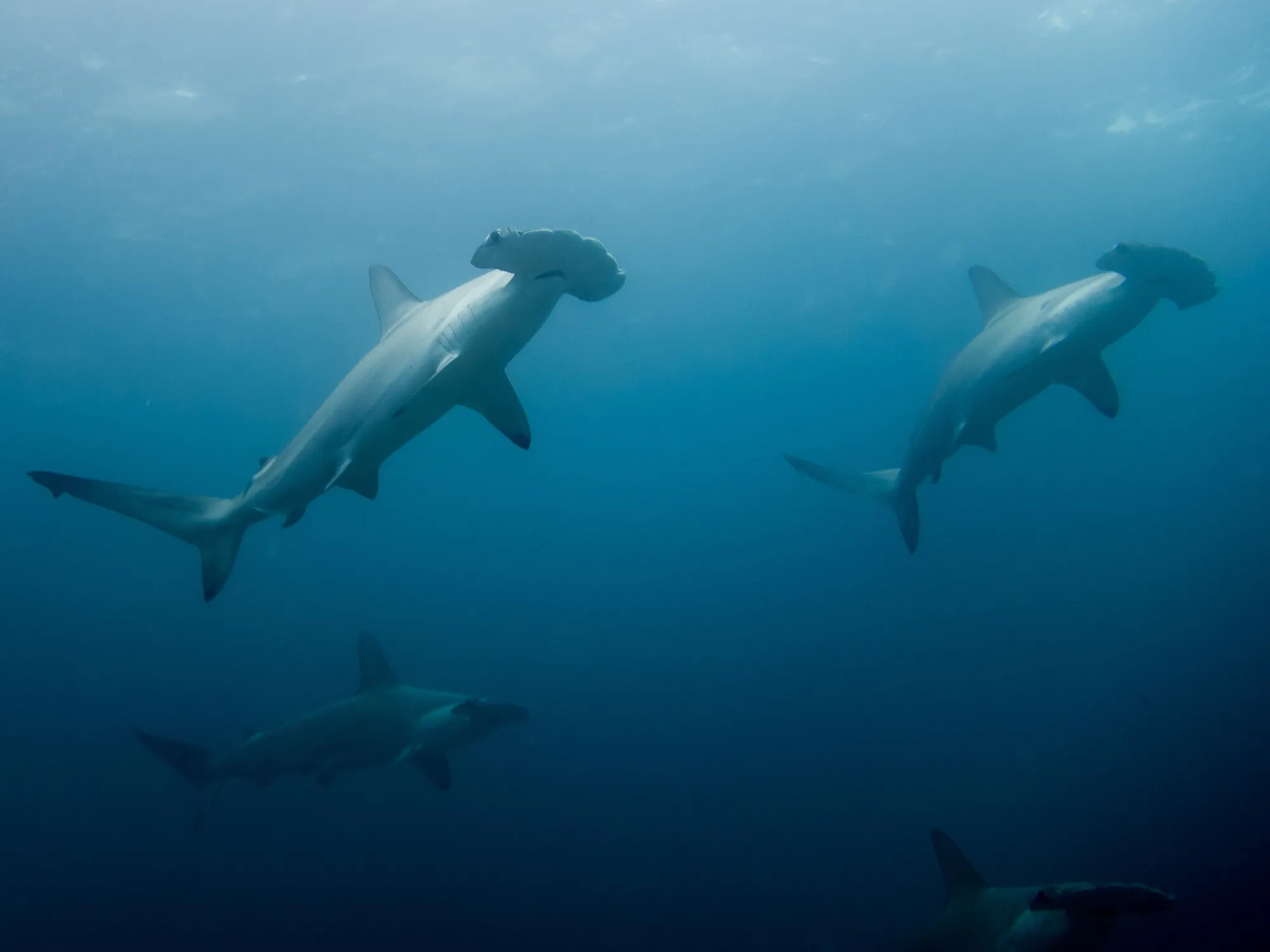
- Hammerhead sharks: Both Sphyrna mokarran and Sphyrna lewini were listed under Appendix I.
New Appendix II Listing (International Cooperation): The species Mustelus schmitti was added to Appendix II, promoting regional cooperation for its management in the Southwest Atlantic.
Action Plans and Continued Focus:
- Τhe Single Species Action Plan for the sand tiger shark (Carcharias taurus) was adopted, aiming to strengthen conservation and recovery efforts. This species is believed to have already disappeared from the Mediterranean.
- The Single Species Action Plan for the Tope Shark (Galeorhinus galeus) was adopted, in which we had active involvement.
Concerted Actions:
Concerted actions were agreed to promote international cooperation for manta rays. Parties also committed to continuing work on the conservation of angel sharks. At this point, we also highlight the Single Species Action Plan for the Angel Shark (Squatina squatina), in which we had active participation: https://sharks.cms.int/document/single-species-action-plan-angelshark-squatina-squatina-mediterranean-sea
Landmark Protection of Critical Habitats:
Beyond individual species, COP15 made particularly significant progress in protecting the critical ecosystems upon which many marine and other organisms depend.
- Seamount protection: An important decision was adopted recognising seamounts as critical habitats for migratory marine species, such as sharks, whales, and sea turtles. The decision calls on states to protect them from destructive fishing practices (such as bottom trawling) and overfishing.
- Deep-sea mining moratorium: The conference reinforced its position from COP14, calling on states not to proceed with or support deep-sea mining until its impacts on migratory species are fully understood, confirming the need for maximum precaution. This is particularly important given that Greece, a Party to the CMS, is intensively preparing for offshore extraction in a critical area for sperm whales, the Hellenic Trench.
- Recognition of Important Shark and Ray Areas (ISRAs): A key decision was adopted requiring states to take Important Shark and Ray Areas (ISRAs) into account in national conservation strategies and spatial planning. We remind that in Greece, four such areas have been identified. Find more here: https://sharkrayareas.org/e-atlas/
Other Key Outcomes:
- Bycatch reduction: A strong new decision was adopted to reduce the bycatch of CMS-listed species during fishing activities. Particularly important for our work in the Mediterranean.
- Aquatic wild meat: The conference endorsed intensified efforts to address the exploitation of migratory species (including fish, turtles, and cetaceans) as aquatic wild meat.
- Marine turtles: A new decision was adopted on Important Marine Turtle Areas (IMTAs), supporting the protection of “blue corridors”.

