Reflections on the Greek Prime Minister’s Announcement at UNOC3
The announcement made by the Greek Prime Minister at UNOC3 was both influential and closely aligned with the global calls for environmental conservation. However, some reflections that offer important context follow:
- The two Marine National Parks and the 30X30 Goal
Greece's commitment to designate two national parks and achieve 30% of marine protection was already announced at the 2024 Our Ocean Conference.
➤ Find more information here. - Ban on bottom trawling from 2026 in the Greek National Parks
This ban was also part of the commitments announced last year at the same conference.➤ Find more information here.
- 10% No-Take Zones by 2030
This target was announced at the 76th Session of the United Nations General Assembly in 2021.➤ Find more information here.
In essence, the Prime Minister reiterated Greece's intention to stay on this path, and indeed, we are seeing some progress. However, as an organization working on the front lines of conservation in Greece, we would like to raise a few critical points:
- Targets are just numbers without actual implementation
Reaching 30% of marine protection and 10% strict protection is important, but these numbers alone are insufficient. The European Commission referred Greece to the Court of Justice for failing to establish proper conservation objectives and management measures to adequately protect habitats and species in 2019. Despite public consultations of some draft management plans concluding over two years ago and the public consultations were conducted for the majority of the Special Environmental Studies, only five out of the total 23 studies have received official approval.➤ Find more about the EU actions against Greece here.
➤ Find more about the management plans and the Observatory weseayou here. - What about the remaining "unprotected" 70%?
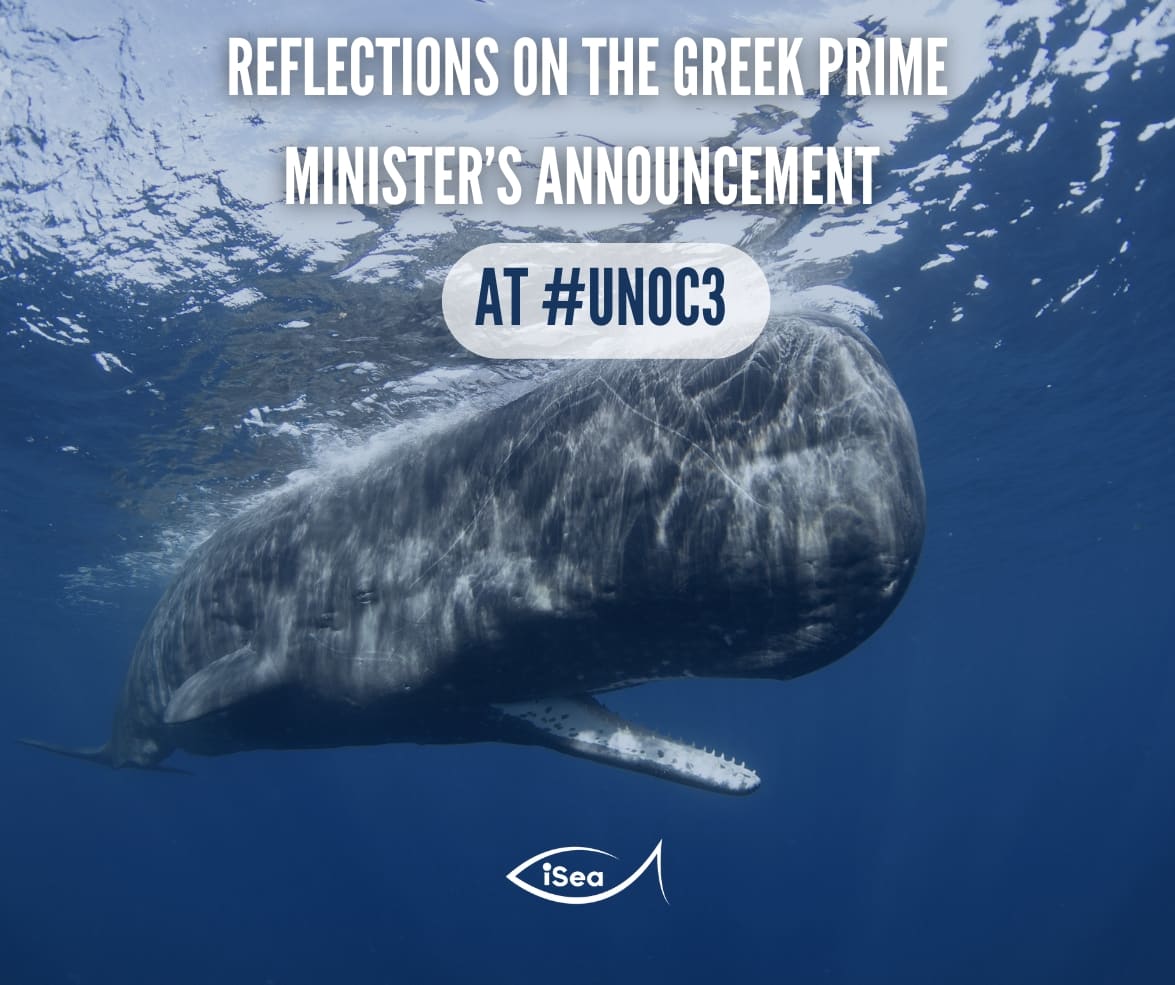
While the Prime Minister announced plans to exceed 30% protection and achieve 10% strictly protected zones, is it acceptable to continue the unsustainable exploitation of the remaining 70%? Recently, Greece approved oil exploration in the Hellenic Trench, a highly sensitive area that is home to a resident population of around 500 sperm whales and one of the most important deep-sea coral habitats in the Mediterranean. Notably, this area is excluded from the new national parks, with only a small area of the Hellenic Trench may be included where there are also plans for oil drilling.➤ Find more about oil drilling at the Hellenic Trench here.
➤ Find more about the Hellenic Trench here. - Is conservation fair and inclusive?
Discussions about no-take zones and strict protection often focus on banning fisheries. But how equitable are such conservation efforts? How are small-scale activities that support local communities compared to large corporations, while oil drilling and intensive fish farming, both high-impact activities, continue largely untouched? Marine Protected Areas must not only be effective but also equitable. Only then can local communities feel ownership and become stewards of the marine environment.➤ Find more on the unsustainability of intensive fish farming in Greece here .
➤ Find more on fish farming in Greece here .
Wrapping up, the Prime Minister's announcements, although not new, reconfirm Greece's intention to move in the right direction. But now is the time to move from intentions to tangible results. It is time to give substance to these commitments and turn marine protected areas into a real conservation tool. As a civil society organization working on marine conservation and restoration, we are ready and committed to supporting this journey.
PS Congratulations to “Amorgorama”, which confirms the above and proves that persistence and determination are essential ingredients of environmental protection. Find more here.

