
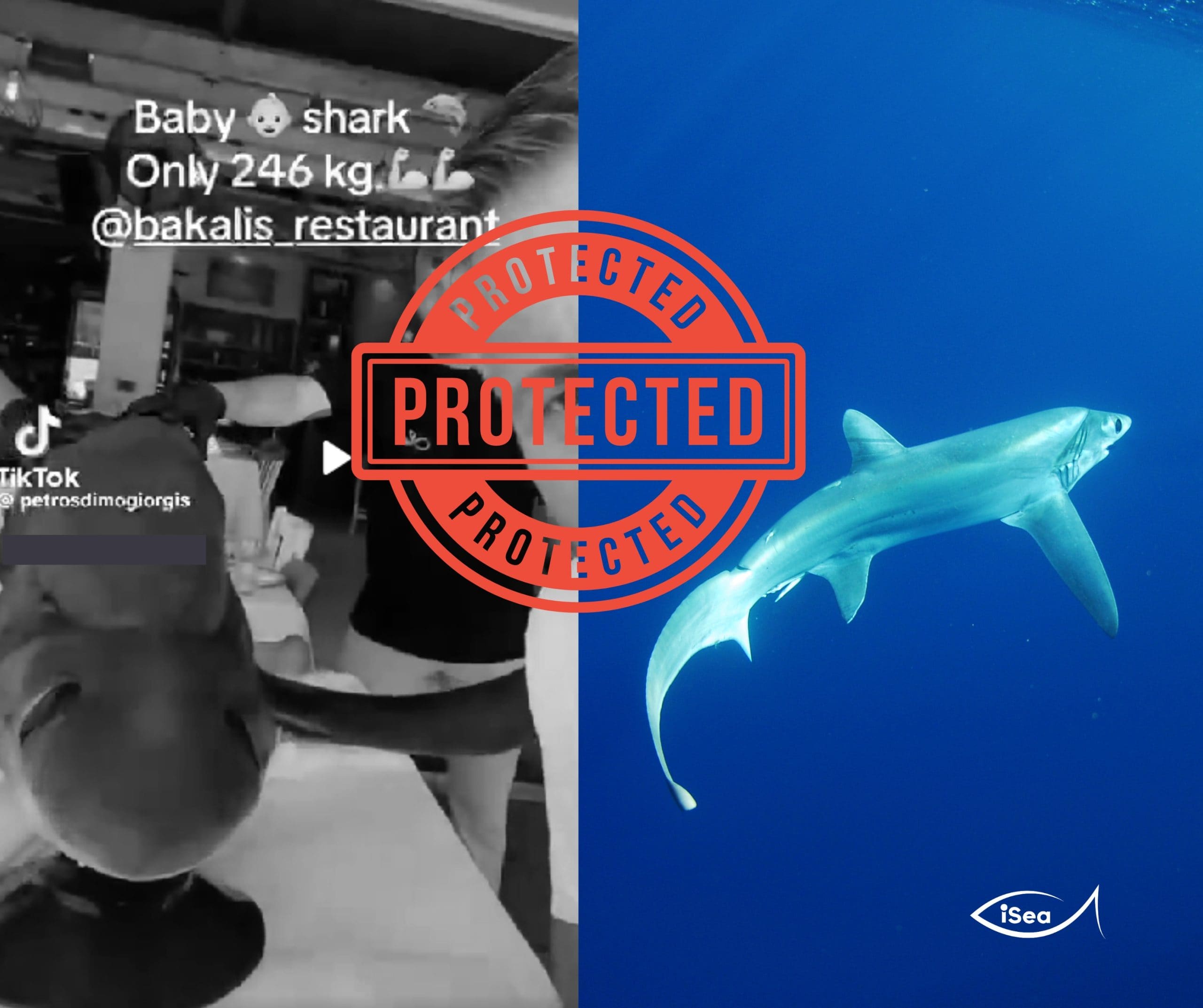
Yet another protected species on our plate
A new incident of illegal fishing, trade, and display of a strictly protected shark species has come to light through a video circulating on social media, originating from Bakalis Restaurant in Pefkochori, Halkidiki. The video depicts the species Alopias superciliosus (Bigeye Thresher Shark), a species whose fishing, is strictly prohibited.
The incident has already been reported by the environmental organisation iSea to the Fisheries Directorate of the Ministry of Rural Development and Food, requesting an immediate investigation and the imposition of sanctions on all responsible parties.
The Bigeye Thresher Shark is a large pelagic shark species belonging to the Alopidae family, characterised by its long tail, which it uses to hunt schools of fish in the open sea. Its global population has been assessed as Vulnerable on the IUCN Red List of Threatened Species, meaning it is at risk of extinction. In the most recent update of Greece’s Red List, there was insufficient data to assess the species’ population. At the same time, the Bigeye Thresher is protected under a series of European laws and recommendations from the General Fisheries Commission for the Mediterranean.
This particular incident once again highlights the lack of awareness and enforcement in Greek waters, where protected species continue to be fished and publicly displayed without consequences, even through social media platforms, as has been previously documented.
According to iSea’s research, over 60% of shark and ray products in Greek markets are mislabeled or unlabeled, often serving as a cover for the trade of protected species that are banned from being caught or sold. In this specific case, the individual shark was likely sold under the false label of "Galeos."
For this reason, the new campaign of iSea in the context of the project obSERVING Nature aims to educate consumers so they can better understand what may really lie behind labels such as “Galeos,” “Rina,” and “Vatos”, supporting the conservation of sharks in Greek seas and protecting public health, since shark meat caught in Greek waters has been found to contain up to 11 times the European Union's safety limit for heavy metals.
iSea calls on the competent authorities to initiate an investigation to identify those responsible, impose penalties, and take meaningful preventive and educational measures to protect marine species that are threatened with extinction.
Find more information:

