
PRESS RELEASE
Sightings of Blue sharks close to the shore in the Corinthiakos and Saronicos Gulfs
Sharks are not a cause for panic but a vital and irreplaceable part of Greece’s marine ecosystems.
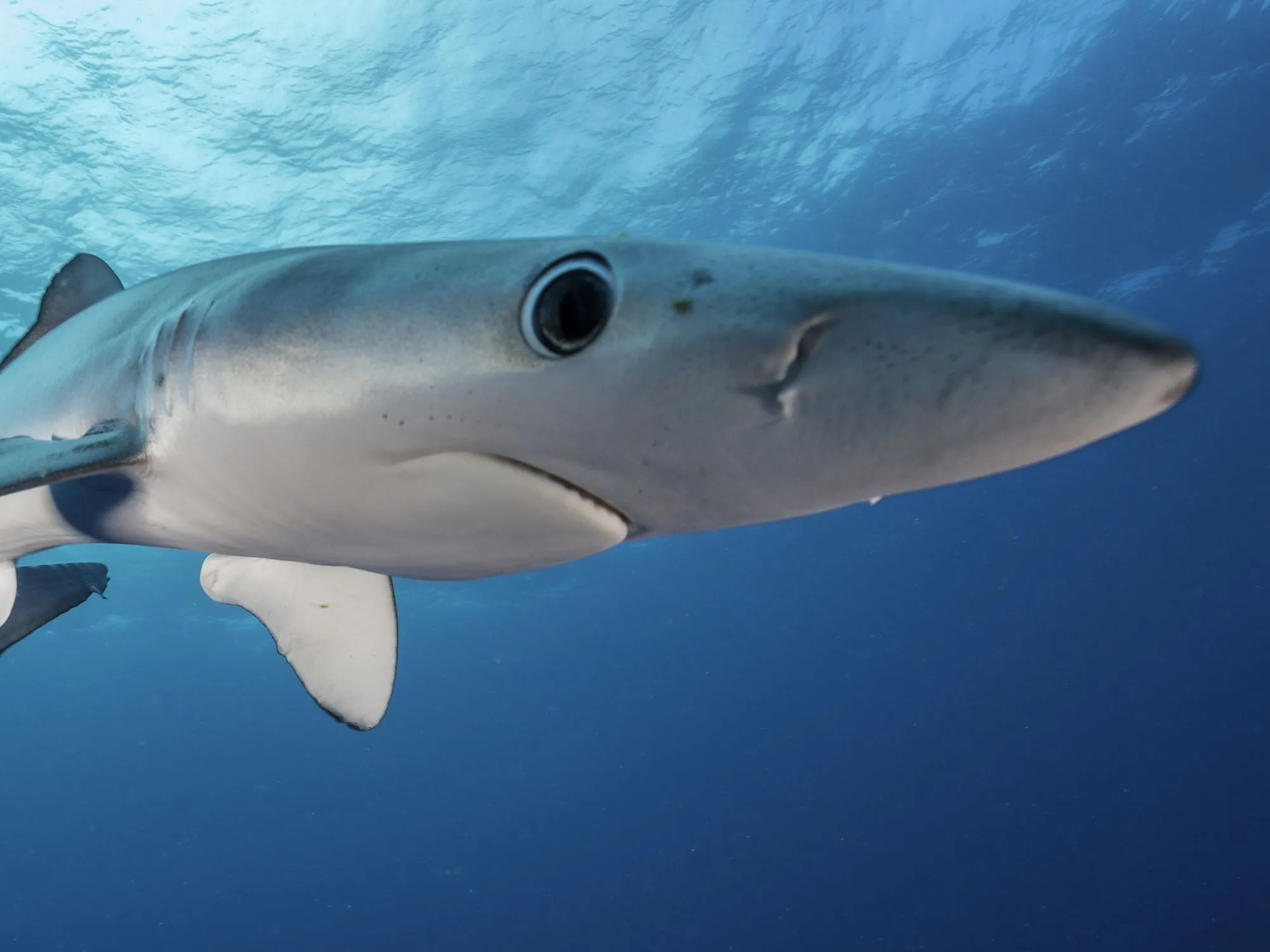
In recent days, repeated sightings of Blue sharks were recorded close to shore in the Saronicos and Corinthiakos Gulfs. Following sightings in Kechries, a Blue shark was also observed in Palaio Kalamaki. These sightings sparked considerable public interest and concern on the mass and social media, and among residents, many of whom contact us whenever they notice either a shark near the coast or other fish species mistaken for sharks.
The species most commonly recorded in recent days is the Blue shark (Prionace glauca), found throughout the Greek seas. Although it is one of the most well-known sharks worldwide, its populations have declined significantly in recent decades due to overfishing and the international fin trade. In the Mediterranean, the Blue shark is assessed as a Critically Endangered species, meaning it is one step away from disappearing from the region, and it is protected under regional legislation.
It is important to emphasise that the presence of sharks in Greek waters is not unusual. Sharks and rays are a natural and highly important component of the marine biodiversity of the Mediterranean and Greek waters, having existed there for millions of years. Most recorded species are either harmless to humans or actively avoid contact with them.
In recent years, there has been a growing perception that shark sightings are increasing. However, this appears to be mainly related to the widespread use of mobile phones and social media, as well as the increased human presence close to the sea, which simply leads to more sightings being recorded and publicised. At the same time, many published pictures and videos are not genuine but are instead products of Artificial Intelligence or ‘recycled’ footage presented as new.
The available scientific knowledge does not support any increase in shark populations in the Mediterranean. On the contrary, many shark and ray species remain in a highly unfavourable conservation status, due to overfishing and the degradation of marine ecosystems.
Sharks are not “invading” our seas, while no new species has been recorded in the last century in the Greek waters. We share the sea with species that inhabited these waters long before humans arrived.
In Greece, 31 shark species, 25 ray species, and 1 chimaera species are recorded, many of which are threatened with extinction both globally and in Greek waters. Today, the Mediterranean is considered one of the most dangerous regions in the world for sharks and rays, as more than 50% of species face extinction risks due to overfishing, habitat degradation, and illegal trade.
In Greece, 68% of shark species, 48% of ray species, and the country’s only chimaera species are threatened with extinction.
At the same time, many of these species are protected under Greek and European legislation. Nevertheless, protected species continue to be caught or even end up in markets and food consumption, often without consumers realizing what they are actually purchasing.
The presence of sharks near the coast should not cause fear or aggression. Instead, it should be approached with respect for wildlife and calmness toward the unknown. Therefore:
- avoid disturbing or chasing the animal,
- calmly leave the water if deemed necessary,
- do not attempt to approach it for photos or videos,
- inform the competent authorities and cost guards,
- if you wish to visit a beach in the area about which you have concerns or go spearfishing, seek information from the local port authority.
The chances of a negative interaction between humans and sharks in the Mediterranean remain extremely low. On the contrary, the real danger concerns the sharks themselves, as thousands are killed every year in the Mediterranean due to fishing activities. Protecting sharks and rays is not only about safeguarding these species. It is about maintaining the balance of marine ecosystems and ultimately preserving healthy seas for all of us.
For any shark or ray sighting, citizens can contact the port authorities and iSea, which coordinates sharks and rays sightings within the National Stranding Network, by sending photographs, videos, and location information, thereby making an important contribution to scientific knowledge and species conservation.
Contact Information: Ioannis Giovos, Conservation Officer, Environmental Organisation iSea, +30 2313090696, +30 6945880415 (for emergencies), info@isea.com.gr
Learn more about sharks and rays in Greek seas here: https://www.youtube.com/watch?v=GNY7IjF9r0Y&t=33s
Learn more about the species here: https://isea.com.gr/el/download/odigos-anagnorisis-karcharion-salachion-kai-chimairon
Find sharks in the Hellenic Red List of NECCA here: https://redlist.necca.gov.gr/en/assessment/?id=238961547
Learn more about the extinction risk facing sharks in Greek seas here: https://isea.com.gr/el/kokkinos-synagermos-gia-toys-karcharies-kai-ta-salachia-stin-ellada/
Submit your shark and ray observations here: https://www.facebook.com/groups/457128891313387
Stay informed about proper release techniques here: https://www.youtube.com/watch?v=Evx5S2MNyPw

