Friday 4 July 2025
NEW DRONE STUDY REVEALS ANCHORING PRESSURE IN ECOLOGICALLY SENSITIVE IONIAN SEA AREAS
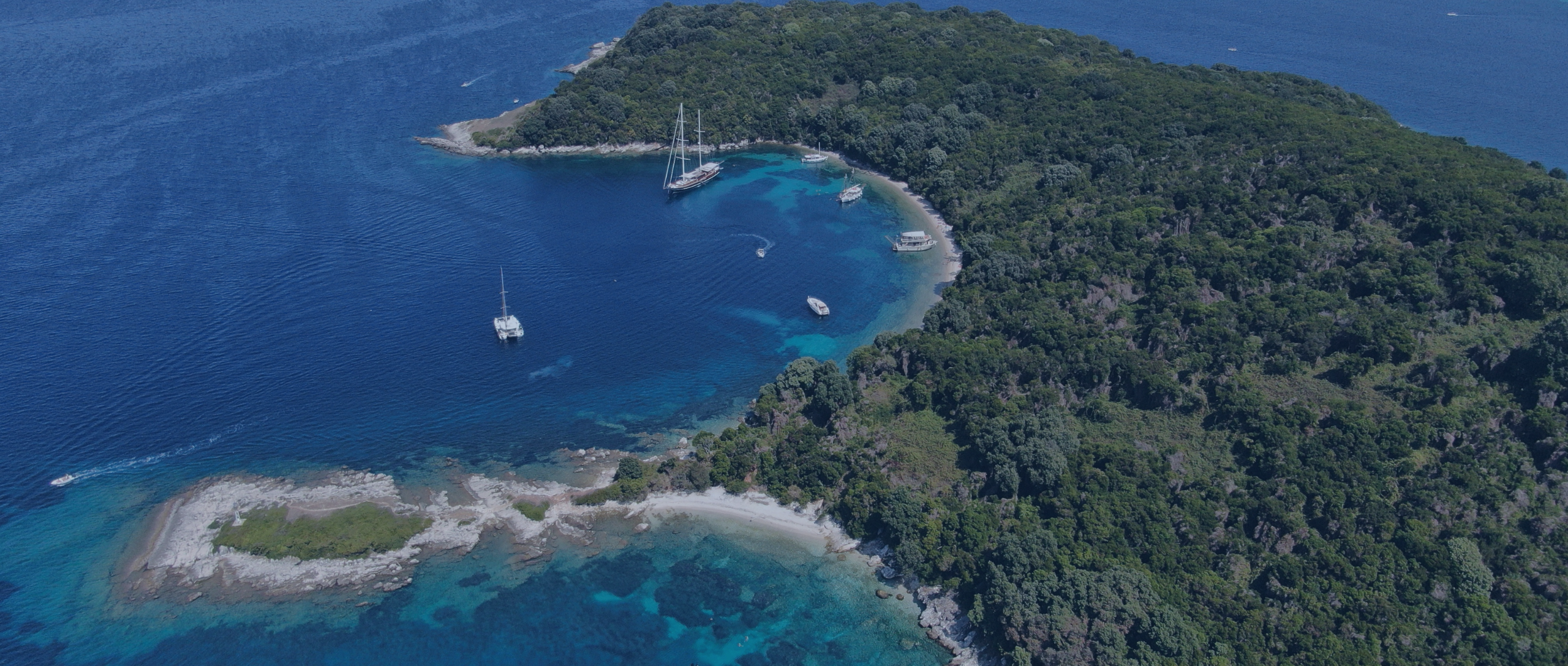
A cutting-edge study conducted by iSea , with support from the Ionian Environment Foundation (IEF) , has utilized drone (UAV) technology to assess anchoring pressure in two ecologically significant areas of the Ionian Sea : the Erimitis peninsula in northern Corfu and the Inner Ionian Archipelago . This research builds upon iSea's previous report, " Prioritising Posidonia oceanica Meadows in the Ionian Sea " which identified these locations as among the most severely impacted by anchoring activities.
In total 12 drone surveys were conducted in Erimitis (Corfu island), 12 in Formicula islet (Inner Ionian Sea, 11 in Atokos (Inner Ionian Sea) and 10 in Arkoudi (Inner Ionian Sea) between July and September. Using aerial footage, the team categorized and counted vessels, sorting them into five groups: small rental boats, sailboats, catamarans, yachts, and cruise ships/larger yachts. These findings were supplemented by iSea's field surveys, which measured the health index of Posidonia meadows in both regions.
Key Findings at a Glance
HERITAGE
- 490 boats observed across 12 surveys ( 65% anchored on Posidonia )
- 64% of the boats anchored on Posidonia were small rental boats
- Arias followed by Vrachli, Akoli were the beaches with the highest anchoring pressure that needed attention
INNER IONIAN SEA
- 409 boats recorded in 32 surveys ( 60% anchored on Posidonia )
- 70% were sailboats or catamarans
- Atokos accounted for 70% of vessel traffic, followed by Formicula (16.2%) and Arkoudi (13.9%)
- 43% of boats at Atokos anchored on Posidonia
- Atokos Bay and Formicula Bay emerged as critical concern areas
These results align with previous assessments of Posidonia meadow health, confirming the immediate detrimental effects of anchoring. However, researchers caution that these findings may underestimate the actual impacts due to the study's limited sampling days and exclusion of species-specific habitat importance.
A prime example is Formicula islet , an 8.7-hectare speck in the Inner Ionian that hosts extraordinary biodiversity, including threatened groupers (Dusky grouper) and the Mediterranean monk seal , one of the most endangered mammals globally. Through collaborative advocacy with the Tethys Research Institute and Blue Marine Foundation , iSea successfully secured a Ministerial Decision establishing a 200-meter strict protection zone around this vital ecosystem.
Urgent Conservation Measures Needed:
- New legislation prohibiting anchoring on Posidonia meadows, both inside and outside Natura 2000 areas, while also regulating other threats (eg aquaculture)
- Immediate implementation of eco-mooring systems (legislation is in place and a recent legislation also issued FEK B 3117/2025 )
- Comprehensive awareness campaigns targeting boat operators and tourism companies
This study highlights the urgent need for immediate action to safeguard these underwater forests, which serve as biodiversity hotspots, carbon sinks, and coastal protectors for the Mediterranean ecosystem.
Find more about Erimitis biodiversity and blue carbon: https://isea.com.gr/wp-content/uploads/2025/02/2024-ENG-Erimitis-Inventory-of-Knowledge_updated.pdf
Find more about Formicula's Blue Carbon: https://zenodo.org/records/8262885
More information about Posidonia oceanica and the Ionian Sea.
Posidonia oceanica is the Mediterranean's underwater forest that forms thriving underwater ecosystems , sustaining Mediterranean marine life and its cultural legacy. One of our biggest allies in the fight against the climate crisis by storing vast amounts of CO₂, sheltering endangered species, and protecting coasts from erosion. At the same time, Posidonia meadows filter water, produce oxygen, and sustain fisheries.
The Ionian Sea, with its stunning scenery, is one of the most essential sailing destinations in the Mediterranean due to its favorable conditions of calm waters, gentle winds, and stable wind regime.
Approximately 440 km² of Posidonia meadows exist in the Ionian Sea, and according to one of iSea's previous studies, anchoring from boats is the primary threat to this critical habitat in this region.
For more information contact : Ilektra Athinaiou, Project Manager, Environmental Organization for the preservation of the aquatic ecosystems, iSea, ilektra.athinaiou@isea.com.gr, 0030 2313090696


