Shark at the coast of Amfilochia: An opportunity to know better the marine life of Amvrakikos Gulf
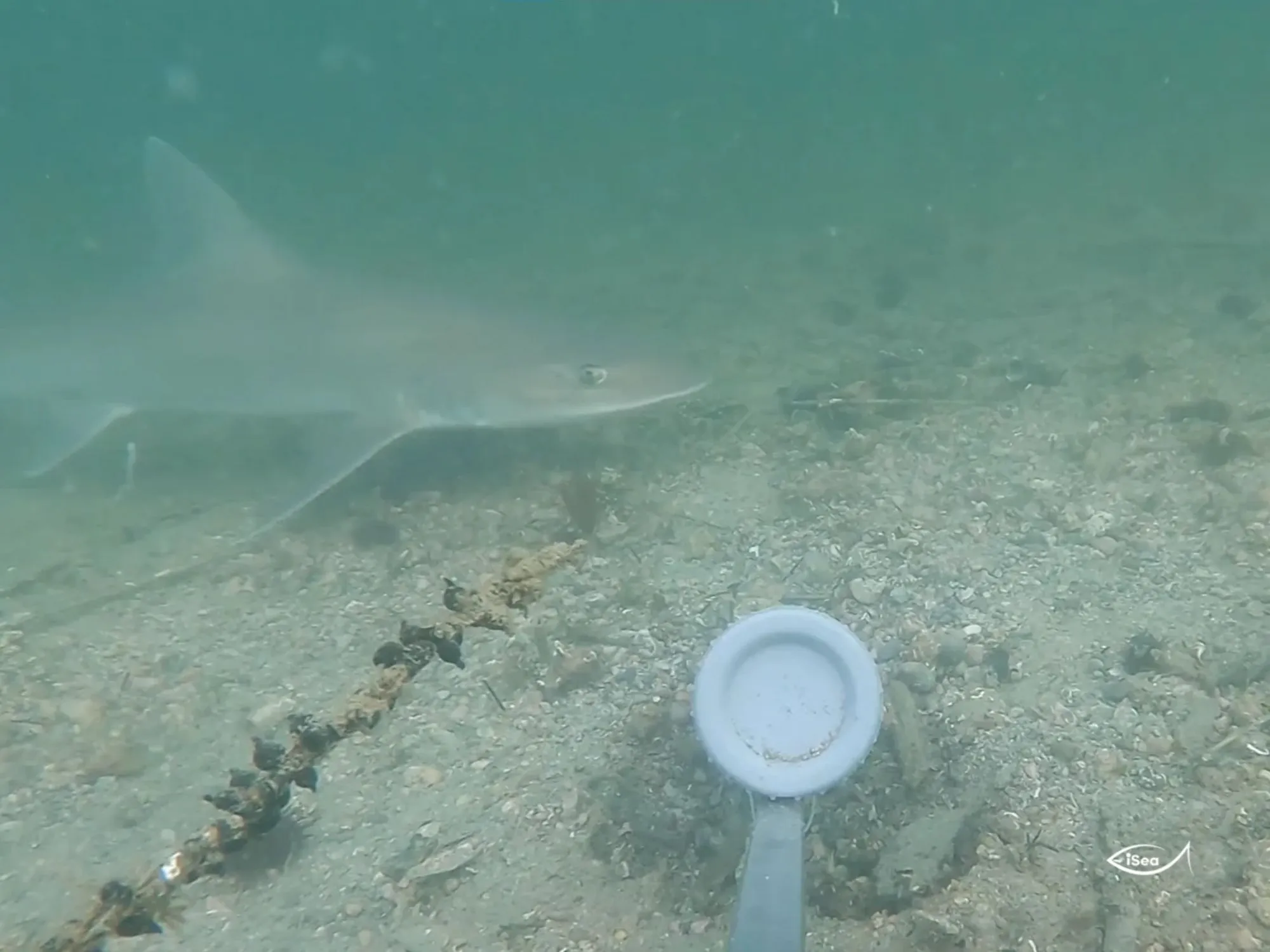
A special encounter with marine life of Amvrakikos Gulf took place on Tuesday night, 3 November, when students of the secondary school of Amfilochia recorded a video of a shark swimming in a short distance from the shore.
This was an individual of the species Mustelus mustelus, known as the Common Smouthhound. The species has been assessed as Endangered in Greece and globally, while it can reach a length of 176 cm. In Amvrakikos Gulf, two species of the same genus are found.
Amvrakikos is an important area for sharks and rays.
The presence of sharks and rats in Amvrakikos is not something exceptional. On the contrary, the Gulf is inhabited by 9 ray species and 1 shark species.
Since 2023, we have been implementing actions in Amvrakikos with the aim of protecting its biodiversity. Through four programs, we are studying shark and ray populations, documenting the impacts of bycatch, and exploring ways to reduce it. At the same time, we collaborate with the fishing community, help fight illegal fishing practices, and implement actions to protect the marine ecosystem.
Specifically, through the Byelasmocatch project, data are systematically collected on shark and ray populations, bycatch, post release mortality, and the areas important for their presence. The collaboration with fishers, combined with scientific field surveys, contributes to a better understanding of the species needs and the development of more effective conservation measures.
What should we do if we encounter a shark?
The presence of a shark near the shore is not, in itself, a reason for panic. Sharks are an integral part of marine ecosystems, and their presence does not necessarily mean there is a danger to humans.
If you encounter a shark in the sea or near the shore:
- Stay calm and keep your distance.
- Do not approach it, and do not attempt to touch or feed it.
- Avoid entering the water while the animal is in the area.
- If it is safe to do so, document its presence with a photo or video without disturbing it.
- Notify the relevant authorities and iSea, providing as much information as possible about the sighting.
Every sighting matters!
The students sighting of the shark is an excellent example of the contribution that citizen science can make to the research and protection of marine life.
Even a single observation can provide valuable information about the species presence and distribution. When such records are collected and assessed, they contribute to a better understanding of biodiversity.
Therefore, in case you encounter a shark or a ray, be sure to record your sighting and share it with us, along with the date, location and any photos or video footage you have.
The protection of marine life begins with learning about it.
Learn more about iSea’s initiatives in the Amvrakikos Gulf: https://isea.com.gr/el/project/amvrakikos-kolpos/
Check also the Identification Guide of Sharks, Rays, and Chimeras: https://isea.com.gr/el/download/odigos-anagnorisis-karcharion-salachion-kai-chimairon/
Find out more about their conservation status in Greece’s Red List: https://isea.com.gr/el/kokkinos-synagermos-gia-toys-karcharies-kai-ta-salachia-stin-ellada/
Share your own sightings on the Sharks and Rays in Greece and Cyprus group here: https://www.facebook.com/groups/sharksingreece
Sign up for the iNaturalist platform here: https://greece.inaturalist.org/
