The Business of Fear: When Truth Takes a Back Seat
Sharks, Jellyfish, Pufferfish and the Media Panic in Greek Seas!
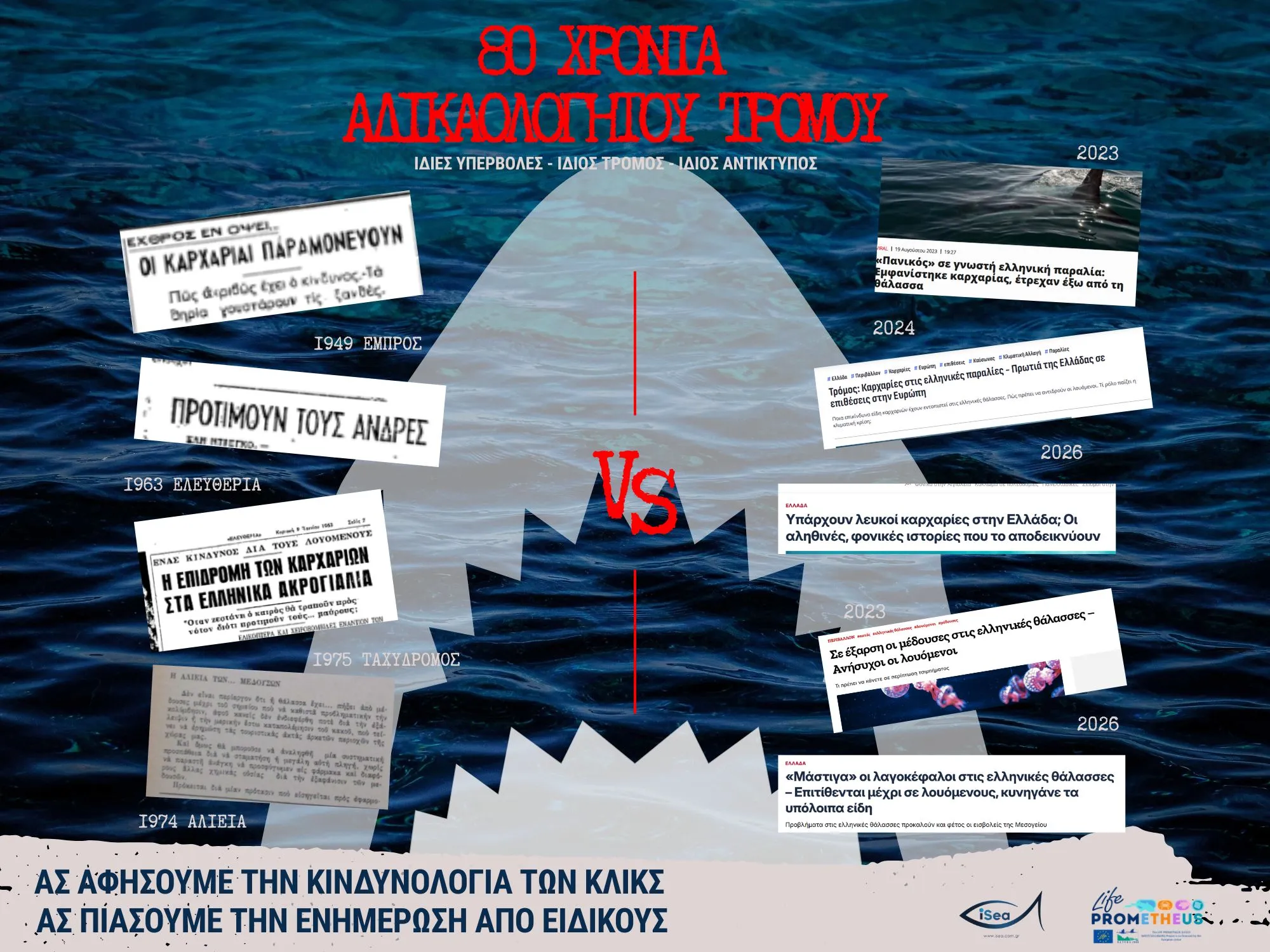
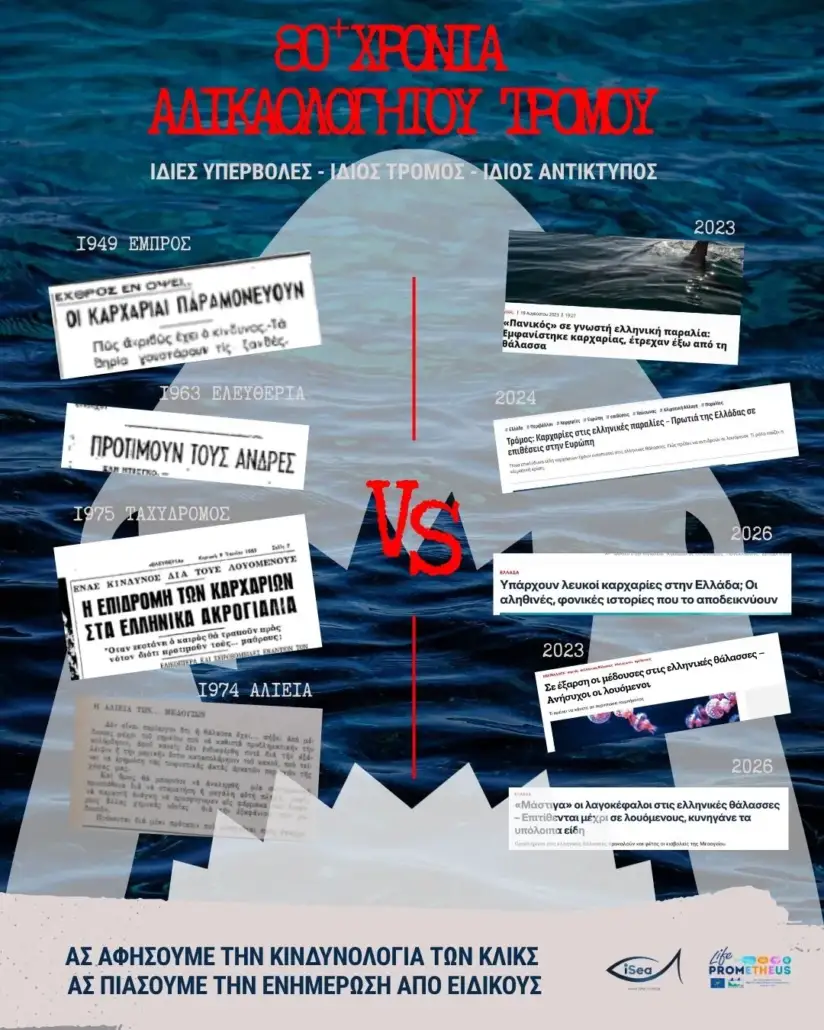
In recent weeks, once again, we are witnessing a new wave of fearmongering about the Greek seas. Jellyfish, sharks, and pufferfish are being presented by some media outlets, self-proclaimed “experts,” YouTubers, and even scientists as a constant threat to swimmers. They are described as species that have just appeared, spreading, increasing, and various other inaccuracies. Οn the one hand they are linking them to unfounded dangers, and on the other these inaccuracies become widely believed when they come from self-proclaimed “experts”.
But reality is not as convenient for clicks and likes!
Jellyfish
Greek seas have not suddenly turned into dangerous waters. Jellyfish are a long-standing and natural component of Mediterranean marine ecosystems. Population outbreaks have been recorded for decades, with references dating back to the 1960s. The real question is not why jellyfish exist, but whether these phenomena are becoming more frequent or longer-lasting, and how they are linked to the climate crisis, overfishing, and pollution of our seas.
Instead of opening this discussion and taking action to collect the necessary long-term data, we choose to talk about nets on beaches and cultivate panic.
Sharks
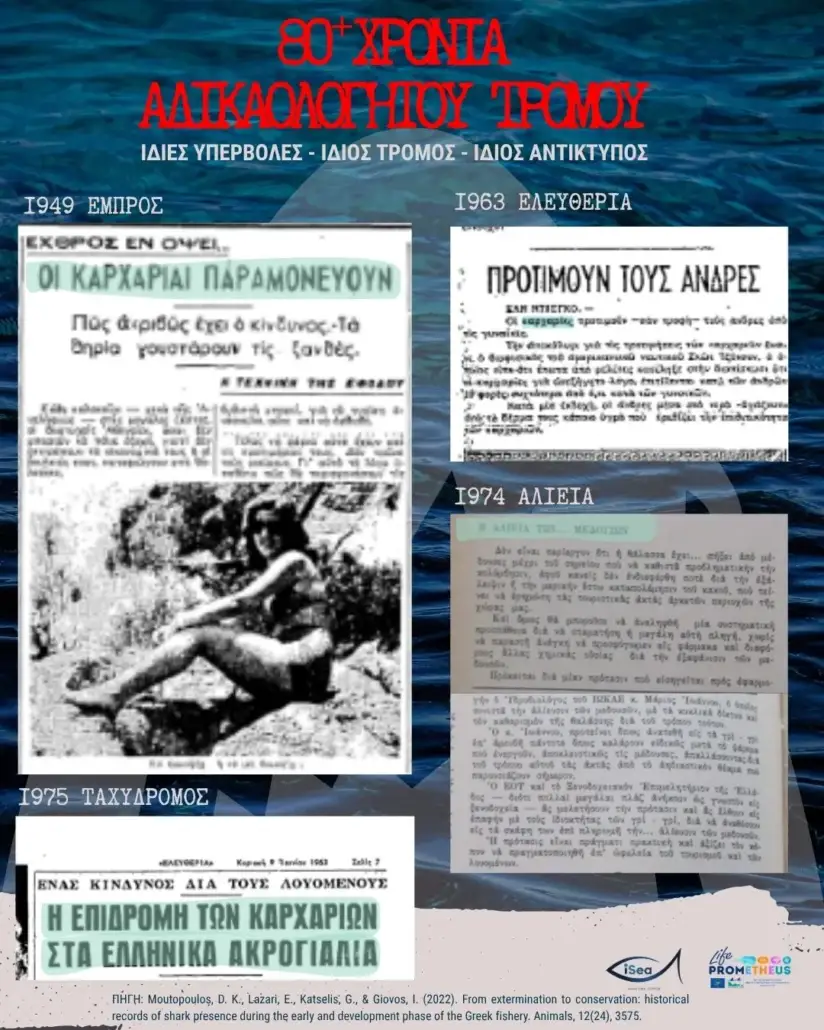
A similar situation applies to sharks. Unsubstantiated maps and articles circulate that present supposed “shark hotspots” in Greece, creating false impressions and fear among the public. At the same time, populations of many shark and ray species in the Mediterranean have suffered dramatic declines in recent decades. Instead of discussing how to reverse this collapse and how to maintain healthy marine ecosystems, we reproduce fear-based narratives, controversial or poorly documented reports of old incidents, and scenarios that do not reflect today’s reality.
The distribution of these species is not determined by social media videos, which represent a drop in the ocean compared to the sharks that are caught and landed daily in fishing ports and fish markets across the country without ever going viral.
Even with the rapid circulation of shark videos, the truth is that human–shark interactions in Greek waters remain extremely rare and significantly fewer than in the past, according to a scientific publication from the University of Patras. Today, however, every animal sighting is recorded, reproduced, and amplified through social media and the constant news cycle.
Pufferfish
And now we are facing yet another moral panic: the pufferfish.
The first confirmed records of pufferfish in Greek waters date back to 2005, and they have now spread throughout the entire territory. While in previous years the discussion focused on whether their consumption is dangerous and their toxicity was emphasized to prevent fatalities, this year it is their bites that are being portrayed as a threat to humans!
Despite dramatic headlines, there is no documented evidence supporting unprovoked attacks to swimmers. On the contrary, there are videos of people, even with kids, petting and playing with pufferfish. Such incidents that may have resulted in bites (by the pufferfish) cannot be characterized as attacks, but rather as disturbance of wildlife.
Instead of seriously discussing the expansion of invasive species, their impacts on ecosystems, and the need for a coordinated national management strategy, public discourse once again is reduced to shouting, oversimplification, and communication fireworks.
The solutions are known
The solutions are known and require scientific documentation, long-term planning, and political will. We need healthy marine ecosystems, protection of biodiversity, recovery of predators, and restoration of the natural balance mechanisms of ecosystems. We need to reduce the pressures we pose on the seas every day.
Ecosystems have mechanisms of adaptation and balance. Humans, on the other hand, are often the main pressing factor. And as long as we refuse to acknowledge this, we will continue to treat symptoms rather than causes.
In Greece and the Mediterranean there are organisations, researchers, and institutions that have been working for years towards this direction. These efforts rarely make headlines in a way that properly informs citizens. Instead, fear-based images are promoted, which certainly lead to clicks, views, and publicity.
Journalists and media outlets bear responsibility. Experts also bear responsibility to speak publicly with calmness, accuracy, and only on issues in which they do have genuine expertise. The same applies to those who present themselves as experts on social media and online platforms. As an environmental organisation working for the protection of the sea, we feel obliged to state clearly:
Fearmongering and click baits do not protect citizens. It does not protect biodiversity. It does not protect the sea.
On the contrary, they distract public debate from the real problems: the climate crisis, pollution, overfishing, biodiversity loss, and the need for meaningful management of marine ecosystems.
We are therefore launching a series of interviews with scientists and environmental professionals, so that specialized and well-documented voices working systematically on these issues can be heard. Our aim is to provide responsible information while also giving access to reliable sources of knowledge.

Alexios Ramfos
Jellyfish
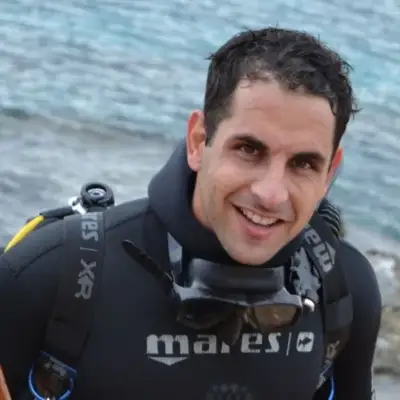
Periklis Kleitou
Pufferfish

Ioannis Giovos
Sharks

Dimitris Moutopoulos
Sharks